 In light of what I consider to be the worst book review ever, I made a decision to really study liturgy this year. I loved the book, but cannot verbalize why. I felt so lost after reading it that I almost sent it back to Thomas Nelson with a letter of apology stating excellent book, but I’m not smart enough to review it, I’m sorry. But I didn’t. The book changed something. The book awakened a desire within my spirit to want to know more. And for that reason alone, I gave the book five stars. And I stand by that review.
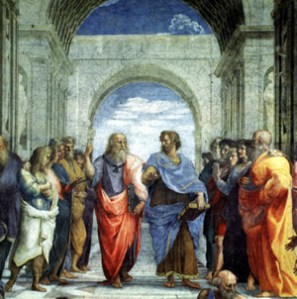
If I could capture my emotions on a canvas this book would be filled with deep greens, blues, and violet. It wouldn’t pop like modern art, rather I would have it flow with depth and substance. It would have texture, high places and low places where you can put your hands and feel the landscape. It would be much like Raphael or Botticelli paintings where the entire story could not be conveyed at first glance. There would be hidden subtleties that only come out with contemplative attention to it’s detail.
Modern art has it’s own beauty, don’t get me wrong. The painting I’m trying to give voice to is simply a different kind of beauty.
I am lost in this sea of the political debates over “right worship”, Liturgy vs. Contemporary, and a concept of a liturgical life that resonates within my spirit. I haven’t found my landing point. It’s as if I think it has to be one side or the other. You are either pro liturgy or you are pro contemporary services and one cannot stand on both sides of the fence. And to make it more interesting, the debate goes deeper than that. Within liturgical circles you have the debate over ancient liturgy vs. modern. There is no reprieve from the arguments.
I don’t get the personal peace that Sister Chittister is talking about from a church life that is 100% contemporary. There are too many distractions and I feel disjointed if I stay in that world for too long. That life is lacking or missing key components of a contemplative life. The sacraments of communion feel empty and void of substance and more of a representation than real presence without that contemplation and repentant stillness before God that a liturgical life or service provides. At least for me.
And yet, it’s occurred to me today, that maybe I’m still not getting it. The object of my studies is still a thing and not a person. I’m missing the connection as much today as I was when I read Joan’s book. My liturgical notebook is cleanly organized by church season, color, and festivals. Full of facts waiting for meaning. It’s too neat, too sterile. It’s missing something. The notebook and the journey isn’t finished yet.
Am I looking for a peace that passes all understanding from the things of liturgy rather than the person of Christ?
Have I traveled back to the young woman who railed against our new sanctuary that had only an empty cross and no pictures of my king? Or am I again the young woman who upon entering a Lutheran church for the first time, whispers (too loudly) to her then boy friend “Why is the cross naked?” making my there-for-moral-support girlfriend fall off her pew?
I don’t know. But I do know that this is the season of Lent. A season to lay down the things that get in the way and keep him from drawing us closer. Much like earthly marriage, I have a lot to learn about my heavenly groom. Maybe the trick for me is to stop trying to think quite so much — and simply be in the journey.

 Our Savior Lutheran Church has agreed to move forward with a capital campaign. After that, a loan and after that a call and breaking ground for a new learning center, worship center and satellite location.
 Deana O'Hara - Speaker, Comedian, Writer